
Dr. Nikita Sharma
Published on February 20, 2026
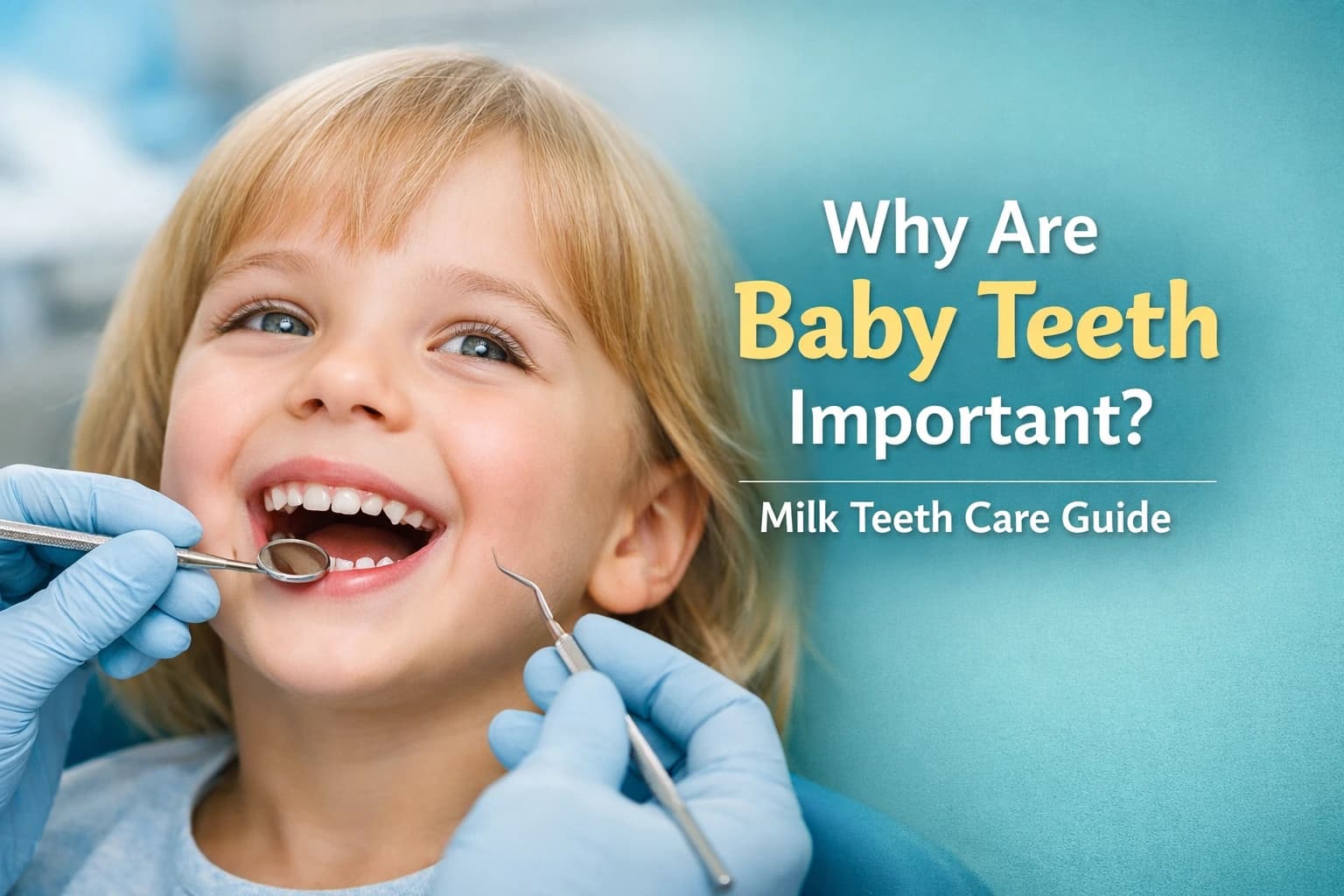
Why Are Baby Teeth Important? Milk Teeth Care Guide
When a baby’s first tooth appears...
When a baby’s first tooth appears, it’s a joyful milestone for every parent. These tiny white pearls, known as milk teeth or primary teeth, may look small and temporary — but their role in your child’s health is very important.
Many parents think, “They will fall out anyway, so why worry?” The truth is, healthy baby teeth are the foundation of strong permanent teeth and overall oral development.
In this blog, we’ll explain why milk teeth matter, common dental problems in children, and how to take proper care of them.
What Are Milk Teeth?
Milk teeth are the first set of teeth that appear in babies. Most children have 20 primary teeth, which start erupting around 6 months of age and usually complete by 2.5 to 3 years.
These teeth remain in the mouth until the child is about 6 to 12 years old, when they gradually fall out and are replaced by permanent teeth.
Why Are Baby Teeth Important?
1. Help in Proper Chewing and Nutrition
Milk teeth allow children to chew food properly. Good chewing ensures:
- Better digestion
- Proper nutrition
- Healthy physical growth
If a child has painful or decayed teeth, they may avoid eating certain foods, leading to nutritional deficiencies.
2. Support Clear Speech Development
Teeth play a major role in correct pronunciation. Sounds like “T,” “D,” “S,” and “Th” require proper tooth positioning. Missing or damaged teeth can affect speech clarity.
3. Maintain Space for Permanent Teeth
Milk teeth act as natural space holders for permanent teeth.
If a baby tooth falls out too early due to decay or injury, nearby teeth may shift into the empty space. This can cause:
- Crowding
- Misalignment
- Need for braces in the future
4. Guide Jaw and Facial Development
Healthy primary teeth support proper jaw growth and facial structure. They help in maintaining balance in the developing mouth.
5. Prevent Pain and Infections
Untreated cavities in baby teeth can lead to:
- Severe toothache
- Swelling
- Infection spreading to nearby tissues
- Damage to developing permanent teeth
In serious cases, dental infections can even affect overall health.
Common Dental Problems in Milk Teeth
🦷 1. Early Childhood Cavities (Baby Bottle Tooth Decay)
This happens when children frequently consume:
- Milk at bedtime
- Sugary drinks
- Sweet snacks
Milk pooling around teeth overnight can cause rapid decay.
🦷 2. Gum Infections
Poor oral hygiene can lead to red, swollen, or bleeding gums.
🦷 3. Tooth Grinding (Bruxism)
Some children grind their teeth during sleep. While common, severe cases need professional evaluation.
🦷 4. Thumb Sucking
Prolonged thumb sucking beyond age 3–4 can affect tooth alignment and jaw growth.
When Should a Child Visit the Dentist?
The first dental visit should happen:
- Within 6 months of the first tooth appearing
- Or by the child’s first birthday
Early visits help:
- Detect cavities early
- Educate parents on proper oral care
- Prevent future dental problems
Regular check-ups every 6 months are recommended.
How to Take Care of Milk Teeth
🪥 1. Start Cleaning Early
Even before teeth erupt:
- Clean baby’s gums with a soft, wet cloth
Once teeth appear:
- Use a soft-bristled toothbrush
- Apply a rice-sized amount of fluoride toothpaste
🪥 2. Brush Twice Daily
- Morning after breakfast
- Night before bedtime (most important)
Parents should assist children until they are around 7–8 years old.
🪥 3. Avoid Sugary Habits
- Do not put baby to sleep with a milk bottle
- Limit chocolates and sticky sweets
- Encourage water after meals
🪥 4. Healthy Diet Matters
Include:
- Milk and dairy products
- Fresh fruits and vegetables
- Nuts (age-appropriate)
Avoid:
- Frequent sugary snacks
- Carbonated drinks
🪥 5. Fluoride Protection
Fluoride strengthens enamel and prevents cavities. Consult your dentist for fluoride application if needed.
What If a Milk Tooth Gets Decayed?
Many parents think removing the tooth is the only solution — but that’s not always correct.
Treatment options may include:
- Tooth-colored fillings
- Pediatric crowns
- Pulp therapy (if infection reaches nerve)
- Space maintainers (if early extraction is required)
Saving baby teeth whenever possible is important for proper development.
Myths About Milk Teeth
❌ “They will fall out, so treatment is not needed.”
✔ Truth: Untreated decay can harm permanent teeth.
❌ “Cavities in baby teeth don’t cause pain.”
✔ Truth: They can cause severe pain and infection.
❌ “Brushing once a day is enough.”
✔ Truth: Twice daily brushing is essential.
The Role of a Pediatric Dentist
A pediatric dentist (Pedodontist) specializes in children’s dental care. They understand:
- Child behavior management
- Growth and development patterns
- Preventive dental techniques
Professional care ensures your child has a positive dental experience.
Give Your Child a Healthy Smile for Life
Healthy milk teeth mean:
- Proper chewing
- Clear speech
- Correct alignment of permanent teeth
- Confident smile
Taking care of baby teeth today prevents major dental problems tomorrow.
Consult a Pediatric Dental Specialist in Ajmer
For expert milk teeth care and child-friendly dental treatment, consult:
Dr. Nikita Sharma
B.D.S., M.D.S. (Pedodontics)
📞 Call for Appointments: +91 79761 22545
📍 Clinic 1: Paras Urology & Multispeciality Hospital
Haribhau Upadhyay Nagar, C-Block, Pushkar Road, Ajmer
(10:00 AM - 12:00 PM)
📍 Clinic 2: Home Clinic
B-455 Panchsheel, B Block, Ajmer, Rajasthan
(5:00 PM - 7:00 PM)
Early care leads to lifelong healthy smiles. Book your child’s dental check-up today! 😊