
Dr. Nikita Sharma
Published on August 25, 2026
What Causes Bad Breath in Children? 7 Reasons Parents Should Know
What Causes Bad Breath in Children? 7 Reasons Parents Should Know
Bad breath in children can be easy to dismiss. Maybe your child just ate something strong-smelling. Maybe they haven't brushed properly. Or maybe you assume it will disappear on its own.
Sometimes it does. But if your child's breath has an unpleasant smell repeatedly, even after brushing, it may be worth finding out why.
Bad breath, also called halitosis, is usually linked to something happening in the mouth. However, eating habits, dry mouth, nasal problems and some health conditions can also contribute.
The good news is that most causes can be identified and managed once you know what is behind the problem. Here are 7 common reasons your child may have bad breath.
1. Food Particles Are Stuck in the Mouth
Children are not always the best at cleaning every part of their mouth.
Small pieces of food can remain between teeth, around the gums, or on the tongue. When these particles stay there for a while, bacteria in the mouth can break them down and produce unpleasant-smelling compounds.
This can happen more easily when children eat sticky or sugary foods and don't clean their teeth properly afterwards.
Brushing twice a day and cleaning between the teeth can help remove food that a normal toothbrush may miss.
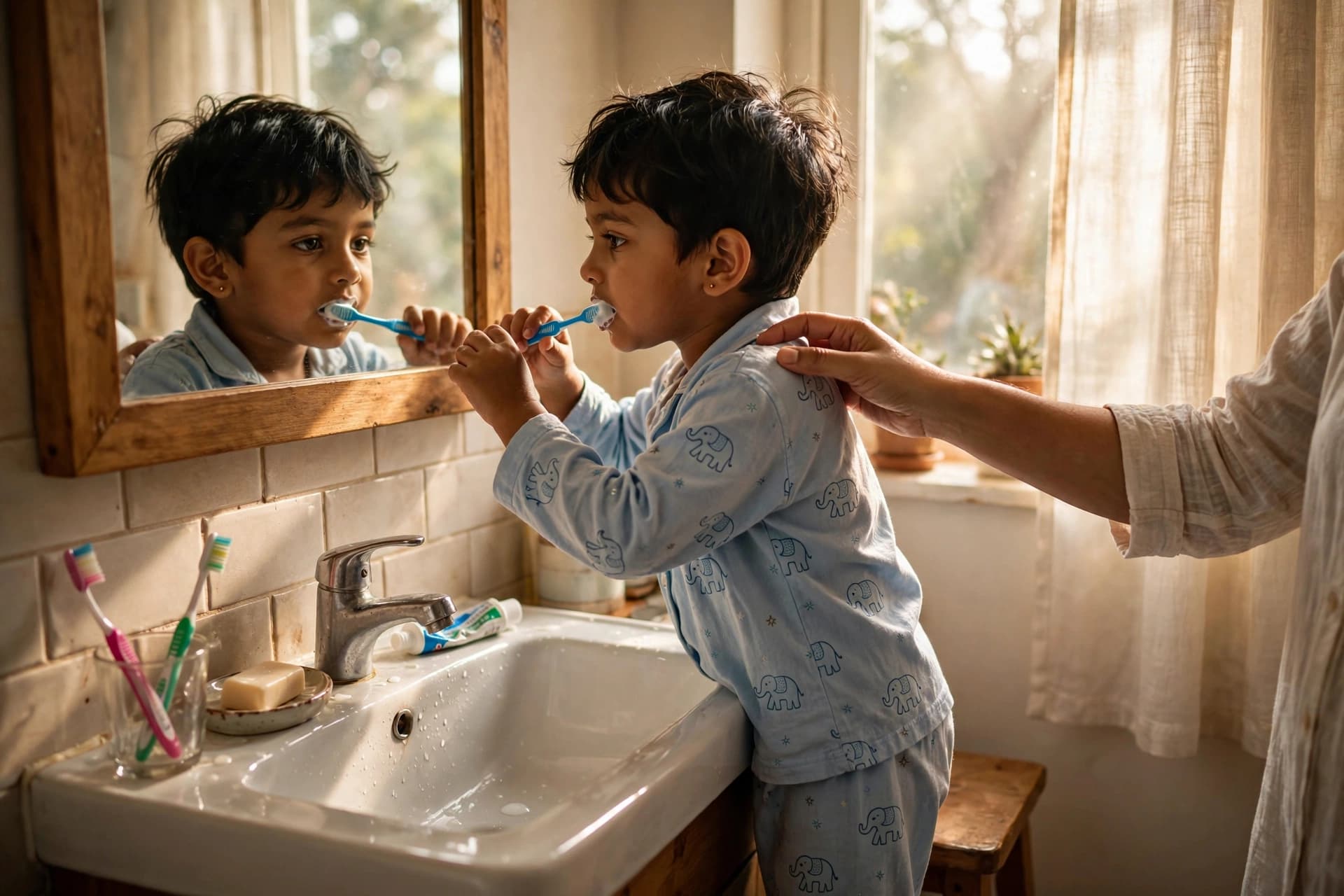
For younger children, parents may need to supervise brushing because children often believe they have cleaned their teeth properly when they have not.
2. The Tongue Isn't Being Cleaned Properly
Brushing your teeth doesn't mean the entire mouth has been cleaned.
The tongue has a textured surface where bacteria, food debris and dead cells can collect. If this buildup remains, it can contribute to bad breath.
Ask your child to gently clean their tongue when brushing. The goal isn't to scrub aggressively. A gentle cleaning of the tongue is usually enough.
If your child's breath continues to smell despite good brushing and tongue cleaning, there may be another reason that needs attention.
3. Cavities or Gum Problems May Be Responsible
A child's bad breath can sometimes be a sign of an oral health problem.
Tooth decay, gum inflammation, or an infection can create an environment where bacteria multiply and unpleasant smells develop.
You may also notice other signs, such as:
- Toothache
- Sensitivity while eating
- Swollen or bleeding gums
- Food getting stuck around a particular tooth
- Avoiding certain foods
- Swelling around the face or gums
Children don't always tell parents when something hurts. Some may simply change the way they chew or avoid using one side of their mouth.
If bad breath is persistent and you notice any of these symptoms, a dental examination is a good idea.
4. Your Child May Not Be Drinking Enough Water
Saliva does more than keep the mouth wet.
It helps wash away food particles and supports the mouth's natural cleaning process. When your child doesn't drink enough fluids, the mouth can become dry and bacteria can build up more easily.
Children may drink less water when they are busy playing, at school, travelling, or simply because they prefer other drinks.
Encourage regular water intake throughout the day, particularly after physical activity.
If your child frequently complains of a dry mouth or seems unusually thirsty, don't assume that dehydration is the only possible explanation. Persistent dryness may need further evaluation.
5. Mouth Breathing Can Make the Problem Worse
Some children breathe through their mouth instead of their nose, particularly while sleeping.
Mouth breathing can dry out the tissues inside the mouth. Less moisture can mean that food debris and bacteria remain around for longer, which may contribute to unpleasant breath.
You may notice that your child:
- Sleeps with their mouth open
- Wakes up with a dry mouth
- Snores
- Has a blocked nose frequently
- Breathes through their mouth during the day
Mouth breathing can have different causes, including nasal blockage and enlarged tonsils or adenoids.
If it happens regularly, it is worth discussing with a healthcare professional rather than treating only the bad breath.
6. Certain Foods and Eating Habits Can Affect Breath
Sometimes the explanation is much simpler.
Certain foods naturally contain compounds that can temporarily change the smell of your child's breath. Strong-smelling foods, for example, can leave an odour behind even after the food has been swallowed.
Frequent snacking can also make oral hygiene more difficult, particularly when children eat sticky or sugary foods throughout the day.
This doesn't mean children need to avoid every food that can affect breath. Instead, focus on regular brushing, drinking water, and maintaining a balanced eating routine.
If the smell disappears after the food has passed and does not keep returning, it is usually less concerning than persistent bad breath.
7. The Cause May Be Outside the Teeth
Not every case of bad breath starts with the teeth.
Children can sometimes have unpleasant breath because of nasal congestion, sinus problems, throat infections, tonsil-related issues, or other conditions.
For example, mucus from the nose can drain towards the throat and contribute to an unpleasant smell.
You may notice bad breath together with:
- A blocked or runny nose
- Frequent throat problems
- Persistent coughing
- Snoring
- Difficulty breathing through the nose
- A recurring unpleasant taste
If your child's breath remains unusual despite good oral hygiene, it may be time to look beyond brushing and consider whether another issue is involved.
When Should Parents Take Bad Breath Seriously?
Occasional bad breath isn't necessarily a problem. The more important question is whether it keeps happening.
Consider speaking to a pediatric dentist if:
- The smell continues despite regular brushing
- Your child has tooth pain
- The gums are swollen or bleeding
- You notice a damaged or darkened tooth
- Your child avoids chewing
- There is swelling around the mouth
- Bad breath is accompanied by other persistent symptoms
A dental examination can help determine whether the problem is related to cavities, gums, oral hygiene, or another dental issue.
How Can Parents Help Prevent Bad Breath?
Good oral habits are the first step. Make sure your child:
- Brushes twice a day with fluoride toothpaste
- Cleans the tongue gently
- Cleans between teeth when appropriate
- Drinks enough water
- Has regular dental check-ups
- Doesn't constantly snack throughout the day
- Gets help with brushing until they can clean their teeth effectively themselves
For younger children especially, parents should supervise brushing rather than assuming the child can manage the entire routine independently.
Conclusion
Bad breath in children is not always a sign of a serious problem.
It can come from something as simple as food left in the mouth or an inadequate brushing routine. But persistent bad breath can also be connected to cavities, gum problems, dry mouth, mouth breathing, nasal issues, or other conditions.
The key is to notice the pattern. If your child's breath repeatedly smells unpleasant despite good oral hygiene, don't simply cover it up with mouth fresheners or assume they will outgrow it.
Finding the underlying cause is a better approach. A pediatric dentist can examine your child's teeth, gums and mouth and help determine whether a dental problem is contributing to the bad breath.
If your child has persistent bad breath, consider consulting Dr. Nikita Sharma for a proper evaluation and personalized preventive care plan.
Frequently Asked Questions (FAQs)
1. Is bad breath normal in children?
Occasional bad breath can happen, especially after eating certain foods or waking up. Persistent bad breath should be evaluated.
2. Can cavities cause bad breath in children?
Yes. Tooth decay and other oral infections can sometimes contribute to an unpleasant smell.
3. Can mouth breathing cause bad breath?
It can. Breathing through the mouth may dry the mouth and allow bacteria and debris to build up more easily.
4. Should children use mouthwash for bad breath?
Mouthwash should not be used to simply cover persistent bad breath. Finding the underlying cause is more important.
5. When should I take my child to a pediatric dentist?
If bad breath continues despite good oral hygiene, or occurs with tooth pain, swollen gums, bleeding, or other unusual symptoms, a dental evaluation is recommended.
📞 Call for Appointments: +91 79761 22545
📍 Clinic 1: Paras Urology & Multispeciality Hospital, Haribhau Upadhyay Nagar, C-Block, Pushkar Road, Ajmer (10:00 AM - 12:00 PM)
📍 Clinic 2: Home, B-455 Panchsheel, B Block, Ajmer, Rajasthan (5:00 PM - 7:00 PM)