
Dr. Nikita Sharma
Published on November 15, 2026
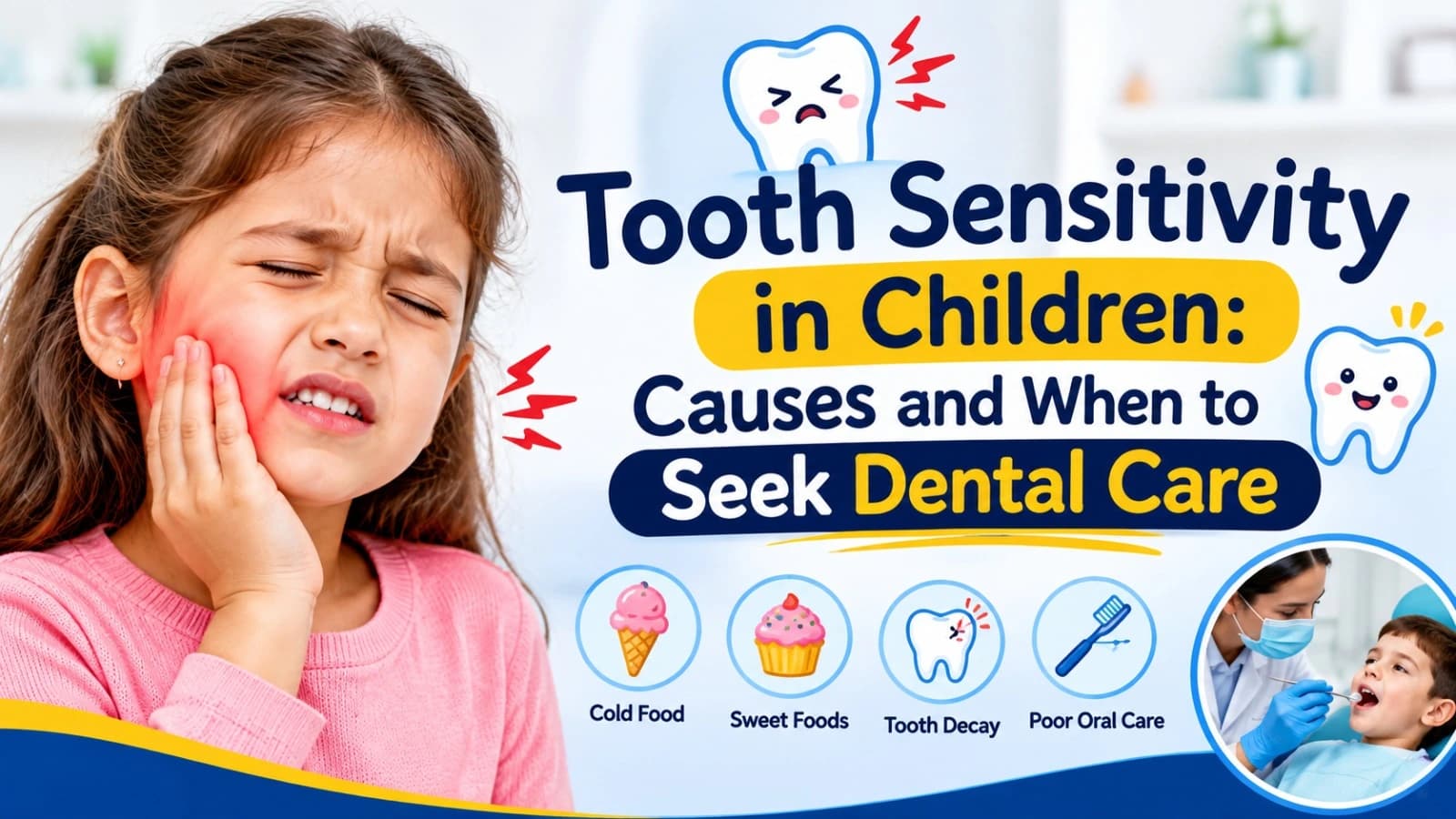
Tooth Sensitivity in Children: Causes and When to Seek Dental Care
Tooth Sensitivity in Children: Causes and When to Seek Dental Care
Your child takes one sip of cold water and flinches. Or ice cream, their favorite thing in the world, suddenly gets pushed away. That sharp zing is tooth sensitivity, and it’s a signal worth taking seriously. A pediatric dentist can tell you whether it’s something minor or an early cavity that needs fixing.
Tooth sensitivity in children is a short, sharp discomfort in a tooth when it meets hot, cold, sweet or sour things. The most common cause is tooth decay, and a dental check-up is the only way to be sure.
How Do You Know It’s Sensitivity and Not a Toothache?
Young children can’t always describe what they feel. They’ll say “it hurts” for both. One simple way to tell the difference is to notice how long it lasts.
| Tooth Sensitivity | Toothache | |
|---|---|---|
| Feels like | A quick, sharp zing | Dull, throbbing or sharp pain |
| Duration | Seconds, then fades once the trigger is gone | Lingers for minutes or hours |
| Triggers | Cold, hot, sweet, sour, brushing | Can come on by itself, even at night |
| What it may mean | Exposed or thin enamel, early decay | Deeper decay, infection, injury |
Watch behavior too. A child who avoids cold drinks, eats slowly, chews on one side or refuses to brush is often telling you something without words.
What Causes Tooth Sensitivity in Children?
Here are the usual causes, with what you might notice and what usually helps.
| Cause | What You May Notice | What Usually Helps |
|---|---|---|
| Cavities (tooth decay) | Sensitivity to sweets and cold; brown or black spots or a visible hole | A filling or other treatment by a dentist |
| Thin enamel on baby teeth | Frequent complaints with cold or sweet foods | Fluoride care and good brushing habits |
| Enamel erosion | Sensitivity in kids who sip sugary or acidic drinks often | Cut back on soda, juice and sour candy; rinse with water |
| Hard or rough brushing | Sensitivity along the gum line | A soft brush and gentle circular strokes |
| Cracked or chipped tooth | Sudden sensitivity after a fall or a hard bite | Prompt dental repair |
| Teeth grinding at night | Jaw soreness, worn teeth, morning sensitivity | Dental check; protective measures if advised |
| Teething or loose teeth | Sore gums near a new or wobbly tooth | Usually settles; check if it persists |
| Recent filling | Short-lived sensitivity after treatment | Return to the dentist if it lasts for weeks |
Cavities come first
If your child has sensitive teeth, assume a cavity until a dentist says otherwise. Baby teeth have thinner enamel than adult teeth, so decay reaches the sensitive layer underneath faster. And the deeper a cavity goes, the more it hurts.
Sugary and acidic drinks wear enamel down
It isn’t only bacteria. Acids in fizzy drinks, packaged juices and sour sweets can soften and thin enamel over time, leaving the inner layer exposed. Sipping through the day is worse than drinking it all at once.
Brushing too hard
This is an uncommon cause in kids, but it happens, particularly in children with braces who are still learning to brush around brackets. A soft brush and a light touch protect both teeth and gums.
It isn’t always the tooth
Sinus trouble or allergies can make upper back teeth ache, and grinding can wear teeth down while your child sleeps. If the teeth look fine but the complaints keep coming, mention both to the dentist.
What Can You Do at Home Until the Appointment?
- Switch to a soft toothbrush and brush gently, twice a day, with a fluoride toothpaste suited to your child’s age.
- Avoid very cold, very hot, sugary and sour foods for a few days.
- Cut down on sipping sugary drinks. Offer water between meals.
- Rinse with plain water after sweets or juice.
- Skip sensitive-toothpaste products meant for adults. Many are made for people 12 and older, so ask your dentist first.
These steps ease discomfort. They don’t treat a cavity. If the cause is decay, it won’t go away on its own.
When Should You Take Your Child to a Pediatric Dentist?
Book a dental visit if the sensitivity lingers or keeps coming back, if it gets worse, or if your child avoids eating or brushing because of it. Don’t wait for severe pain. Early treatment is simpler, quicker and easier on your child.
See a dentist soon if you notice:
- Sensitivity lasting more than a few days
- Brown, black or white spots on a tooth, or a visible hole
- Pain that wakes your child at night
- Sensitivity after a fall or injury to the mouth
- Sensitivity that continues weeks after a filling
- Your child chewing only on one side or refusing certain foods
Get same-day dental care if you see:
- Swelling of the face, gums or jaw
- Fever along with tooth pain
- A pimple-like bump on the gum
- Severe pain that painkillers don’t ease
Facial swelling with fever can mean an infection that is spreading. Don’t wait it out.
How Can You Prevent Sensitive Teeth in Kids?
- Brush twice a day and start flossing once teeth touch.
- Keep sweets to mealtimes, not all-day snacking.
- Choose water over soda and packaged juice.
- Visit the dentist for check-ups every six months. The first visit is best by your child’s first birthday.
Frequently Asked Questions
What causes tooth sensitivity in children?
The most common cause is tooth decay. Other causes include thin enamel, acidic or sugary drinks, hard brushing, cracked teeth, night-time grinding, sinus problems and recent fillings. A dentist can find which one applies.
Can tooth sensitivity in a child go away on its own?
Short-term sensitivity after a dental procedure may settle. Sensitivity from a cavity or damaged tooth will not, and it usually gets worse without treatment.
Is sensitive toothpaste safe for children?
Many sensitive-toothpaste products are made for people aged 12 and older. Ask your child’s dentist before using one, and choose a fluoride toothpaste suited to your child’s age.
Why are my child’s baby teeth sensitive to cold?
Baby teeth have thinner enamel than adult teeth, so cold can reach the nerve more easily, especially if there is early decay. A check-up will confirm the reason.
When should I take my child to the dentist for sensitive teeth?
Go if the sensitivity lasts more than a few days, keeps returning, or stops your child from eating or brushing. Go the same day if there is swelling, fever or severe pain.
At what age should a child first see a dentist?
Dental guidelines recommend a first visit by the first birthday, or soon after the first tooth appears. Early visits catch problems before they cause sensitivity.