
Dr. Nikita Sharma
Published on September 30, 2026
How to Prep Your Kid for First Dental Visit
How to Prep Your Kid for First Dental Visit
Taking kids to the dentist can be a stressful experience for both parents and the children. Some children are inquisitive while others can feel anxious due to not knowing what to expect.
The first dental experience should not be terrifying, and with some preparation at home parents can make kids feel at ease and confident. Having a positive first experience can also help kids adapt to dental hygiene as they grow.
When Should a Child First Go to the Dentist?
Parents should not wait until their child has a dental emergency to seek dental care. An early dental examination helps to ensure tooth development, oral hygiene advice, and possible early diagnosis of any problems.
A pediatric dentist can also offer advice on brushing, diet, fluoride, teething, and many other topics relating to children's oral health.
How to Prepare Your Child for a First Dental Visit?
Here are 7 simple ways to help prepare your child for their first dental experience:
1. Talk Positively About the Dentist
Children take cues from their parents, so try to stay positive and calm when talking about the dentist. Parents can say something like, "Let's go meet the dentist and show them your beautiful teeth."
Avoid words like pain, injection, drill, hurting etc. unless you need to explain a specific concern.
2. Explain What May Happen
Most children are reassured by knowing what to expect. Explain that the dentist may:
- Look at, count and check their teeth and gums
- Ask them to open their mouth
- Speak to parents about brushing and diet
Keep the explanation simple, as you do not want to give your child too much information ahead of time.
3. No Scary Dental Stories!
Sometimes well-meaning adults can frighten children by sharing their own frightening dental experiences.
Avoid phrases such as "Don't worry, it won't hurt", as this can actually trigger children to ask more questions such as "Why will it hurt?" Instead, reassure them that the dentist is there to help keep their teeth healthy.
4. Ask Questions
Your child may have questions such as:
- "Will the dentist touch my teeth?"
- "Will I have to open my mouth?"
- "Can I take my toy?"
Answer honestly but keep your answer simple. If you do not know the answer you can tell your child that the dentist will tell them.
5. Pick a Good Time
Try to avoid scheduling the appointment when your child is tired, hungry, or agitated (if possible). A calm child will be more receptive to communication and cooperation during the examination.
6. Bring a Comforter
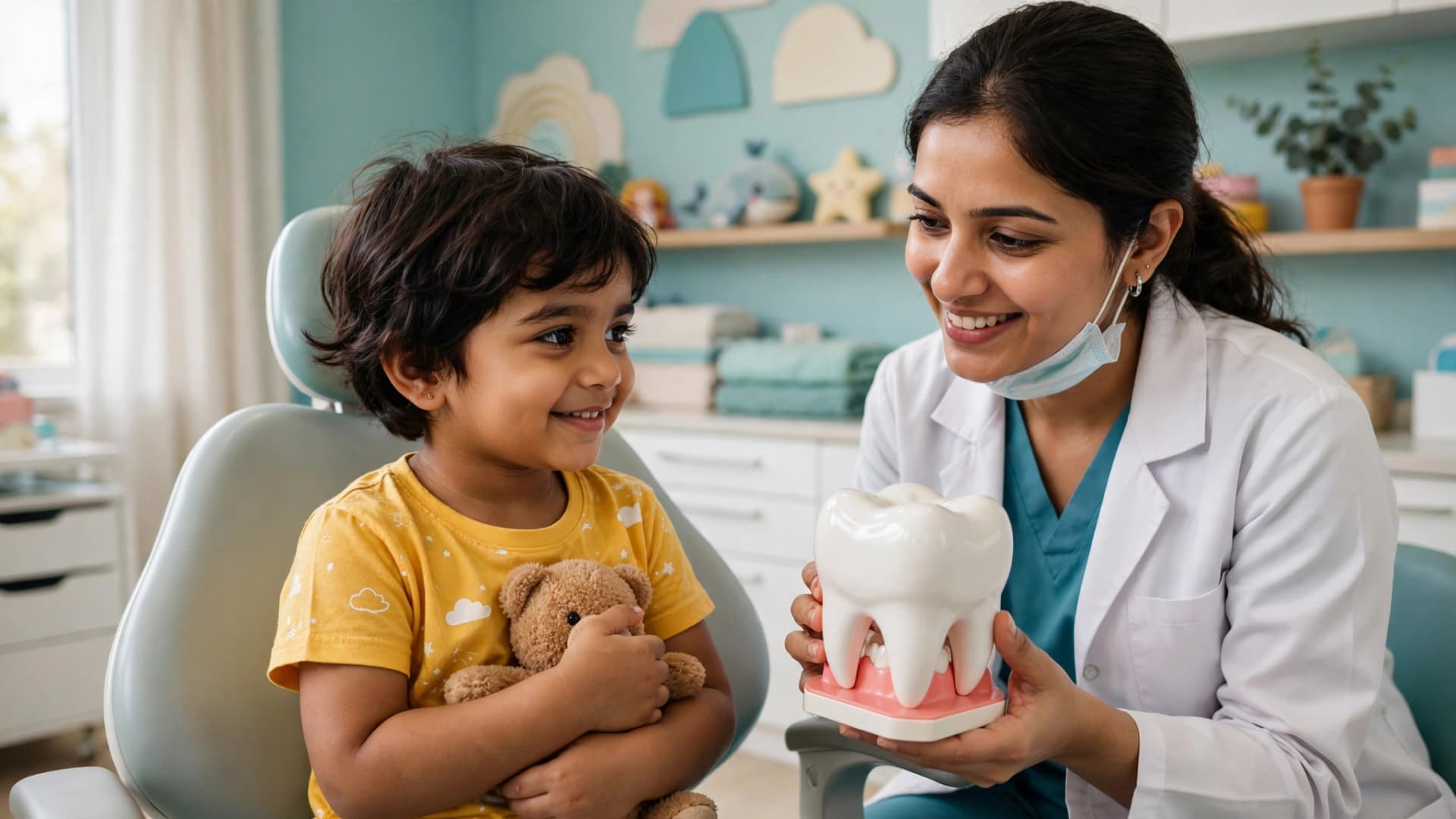
For young children it is a good idea to bring a comforter, a toy or something familiar to help them feel safe and secure. Also, parents can remain calm and supportive rather than seeming anxious.
7. Do Not Force Your Child
If your child becomes anxious give them time to settle down. Forcing the issue or getting angry can create more stress. A positive approach from an early age can help to de-stress the whole process.
Every child is different. Some may settle quickly while others may need more time.
What Happens During a First Dental Visit?
Most first dental appointments are about gaining an understanding of the child's oral health and helping the child feel comfortable in the dentist's care. Depending on their age and cooperation, the dentist may examine teeth and gums, discuss brushing methods, assess tooth development and answer any questions. Each child's visit is unique as the dental care provided is dependent upon their needs and ages.
How Can Parents Promote Good Dental Habits at Home?
The visit to the dentist is only part of a healthy dental care routine. Parents can encourage children to:
- Brush their teeth twice a day
- Use an appropriate amount of fluoride toothpaste (as recommended by a dentist)
- Drink plenty of water
- Limit frequent consumption of snacks or drinks that are high in sugar
- Not use their teeth to open things
- Have regular dental check-ups
As children are developing, they may need supervision while brushing as they learn to clean all areas of their mouth.
What If My Child Is Scared of the Dentist?
Some children can feel apprehensive about visiting the dentist and it is important that parents stay positive and not use negative language around dental care.
Dental anxiety in children can occur from a variety of reasons including a bad experience or unfamiliar surroundings. A pediatric dentist can help by using simple language and various behavior management techniques to help children feel more comfortable.
Why Early Dental Visits Are Important for Kids
Children's teeth and jaws continue to develop as they grow, therefore early dental check-ups can help to identify any problems and offer parents guidance as to how to care for their child's teeth. Having a positive first dental experience can also help children become familiar with the dentist as they get older.
Nivik Smile Care is a dental practice offering pediatric and family dental services led by Dr. Nikita Sharma, who is dedicated to providing preventative dental care in a comfortable environment for children.
FAQs About a Child's First Dental Visit
1. When should my child first visit a dentist?
An early dental examination, during infancy or when the first tooth erupts, is advised. Your pediatric dentist can advise you on what is the most suitable time for your child.
2. How can I make my child less afraid of the dentist?
Talk positively about the dentist, use simple explanations and allow your child to ask questions. Avoid frightening stories.
3. Should I stay with my child during the dental appointment?
For young children it is sometimes helpful to have a parent with them for reassurance. The dentist may also offer advice on how you can support your child.
4. What should I tell my child before going to the dentist?
Keep it simple. Tell them the dentist will look at their teeth and help to keep their smile healthy.
5. What if my child cries during the dental visit?
They may feel uncomfortable in an unfamiliar environment, so allow the dentist to help them settle down.
6. Should I give my child something as a treat after the dentist?
A non-sugary reward, such as a sticker or activity, can be a nice surprise. Avoid giving sweets as a treat following a dental appointment.
7. How often should children visit the dentist?
This depends on the child's oral health and a pediatric dentist can recommend how often they should visit. Regular dental check-ups are important in monitoring the development of teeth and identifying any concerns early.
8. Can a pediatric dentist help with dental anxiety?
Yes, a pediatric dentist can help with anxiety by communicating with children in an appropriate manner to make them feel at ease.
Final Thoughts
The first dental visit for a child is an important step in establishing a life-long relationship with a dentist. By promoting good dental hygiene and making the first experience positive, parents can help their kids develop good oral health habits for life.
Preparation for the first dental visit should not be overcomplicated. Keep the conversation positive, answer questions honestly, stay calm and allow your child to settle.
If you are looking for a pediatric dentist in Ajmer, Dr. Nikita Sharma at Nivik Smile Care offers dental care for children to promote a comfortable first experience and guidance on how to care for teeth at home.
📞 Call for Appointments: +91 79761 22545
📍 Clinic 1: Paras Urology & Multispeciality Hospital, Haribhau Upadhyay Nagar, C-Block, Pushkar Road, Ajmer (10:00 AM - 12:00 PM)
📍 Clinic 2: Home, B-455 Panchsheel, B Block, Ajmer, Rajasthan (5:00 PM - 7:00 PM)