
Dr. Nikita Sharma
Published on August 6, 2026
Dental Emergencies in Children: What Parents Should Do Before Visiting a Dentist
Dental Emergencies in Children: What Parents Should Do Before Visiting a Dentist
What Is a Dental Emergency in Children?
A dental emergency is any sudden dental problem that causes significant pain, bleeding, swelling, injury, or damage to a tooth.
Some common dental emergencies in children include:
- Knocked-out tooth
- Broken or chipped tooth
- Severe toothache
- Swelling around the gums or face
- Dental infection
- Bleeding after an injury
- Loose or displaced tooth after a fall
- Injury to the lips, gums, or tongue
What Should You Do If Your Child Knocks Out a Tooth?
A knocked-out permanent tooth needs quick attention.
First, try to keep your child calm. If the tooth is dirty, gently rinse it with clean water. Do not scrub the tooth or remove any tissue attached to it.
If possible, hold the tooth by the crown, which is the part normally visible in the mouth. Avoid touching the root.
For a permanent tooth, place it back into the socket only if it can be done easily and safely. Otherwise, keep it moist in milk or another suitable storage medium and contact a dentist immediately.
A baby tooth should generally not be placed back into the socket because this can affect the developing permanent tooth.
What If Your Child Breaks or Chips a Tooth?
A chipped tooth may look small, but the damage can sometimes reach deeper parts of the tooth.
Ask your child if they have pain or sensitivity. If you find the broken piece, keep it and take it with you to the dentist.
Avoid giving very hard or sticky foods until the tooth has been examined. A dentist can check whether the tooth needs smoothing, restoration, or further treatment.
What to Do for a Severe Toothache
Toothache in children can happen because of cavities, dental infection, food stuck between teeth, or an injury.
You can gently rinse your child's mouth with clean water and check whether food is stuck between the teeth. If your child is experiencing severe or continuing pain, arrange a dental examination.
Do not put aspirin directly on the tooth or gums. It can irritate the soft tissues.
If pain is accompanied by facial swelling, fever, difficulty swallowing, or difficulty breathing, seek urgent medical attention.
What If Your Child Has a Swollen Face or Gums?
Swelling around a tooth can sometimes be a sign of infection. It should not be ignored, especially if it is getting worse.
Parents should contact a dentist if the child has:
- Swelling around the tooth or face
- Pus near the gums
- Fever
- Severe tooth pain
- Difficulty opening the mouth
- Difficulty eating or swallowing
Early dental care can help identify the cause and prevent the problem from becoming more serious.
What Should Parents Do After a Dental Injury?
After an accident, check your child carefully. Look for broken teeth, bleeding, swelling, or changes in the position of the teeth.
If there is bleeding from the mouth, gently place clean gauze or a clean cloth over the area and apply gentle pressure.
Even if the tooth looks normal from the outside, a dental check-up can be useful after a strong impact. Some injuries may not be visible immediately.
How Can Parents Prevent Dental Emergencies?
Dental emergencies cannot always be avoided, but simple habits can reduce the risk.
1. Encourage Safe Play
Children should use appropriate protective equipment during activities where falls or injuries are possible.
2. Avoid Chewing Very Hard Objects
Do not allow children to chew ice, hard objects, or non-food items.
3. Maintain Regular Dental Check-Ups
Regular dental visits can help identify cavities, weak teeth, gum problems, and developing dental issues before they become emergencies.
4. Teach Good Oral Hygiene
Encourage children to brush twice a day with age-appropriate fluoride toothpaste and maintain good oral hygiene.
5. Keep Emergency Dental Information Handy
Parents should know where to seek dental care if an accident happens. Having a trusted pediatric dentist can make stressful situations easier to manage.
Why Pediatric Dental Care Matters
Children have different dental needs from adults. Their teeth, jaws, and facial structures are still developing, so dental problems need to be evaluated with their age and growth in mind.
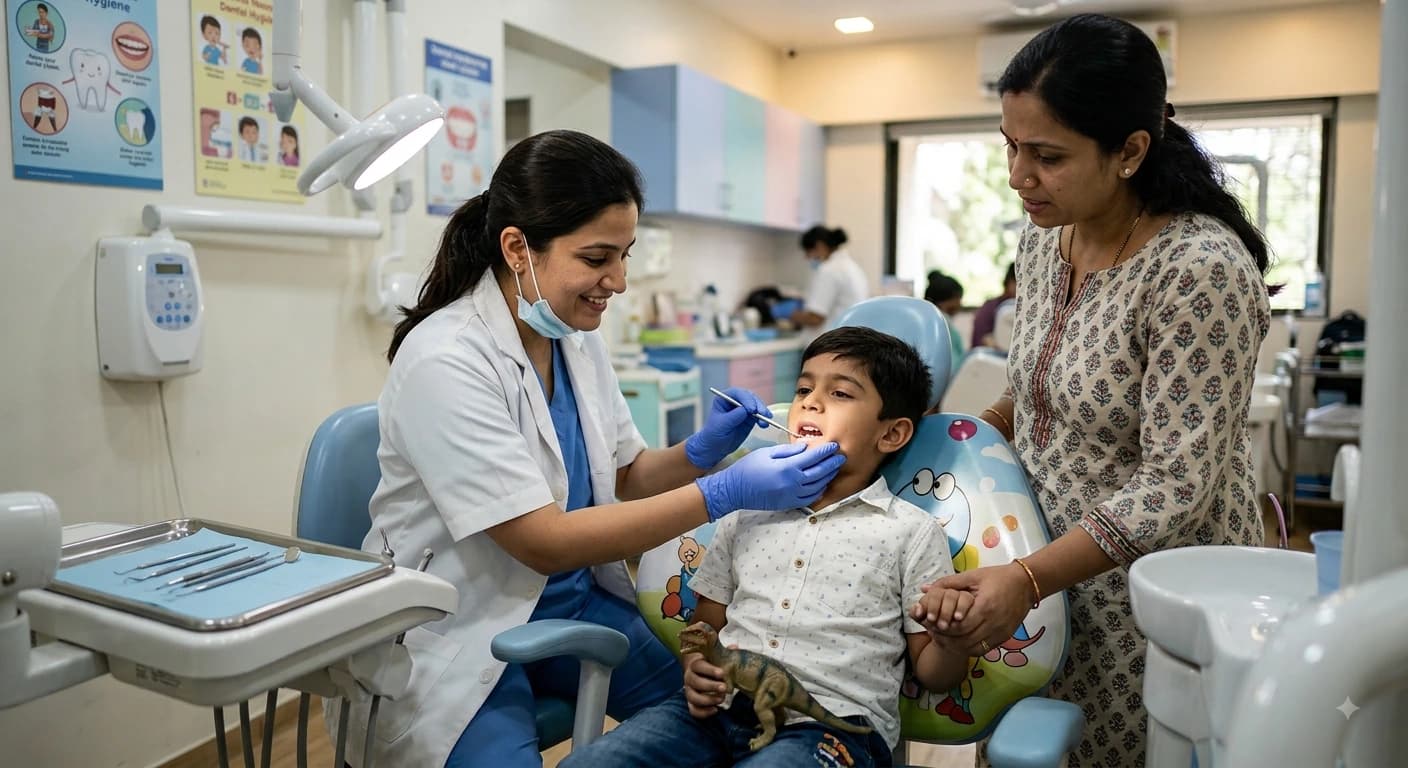
Dr. Nikita Sharma is a B.D.S., M.D.S. (Pedodontics) and specializes in pediatric dentistry, preventive dental care, behavior management, and early orthodontic care. Her approach focuses on creating a comfortable and child-friendly dental experience.
At Nivik Smile Care, children can receive dental care in a welcoming environment with a focus on prevention and comfortable treatment.
When Should You Contact a Pediatric Dentist?
Parents should consider a dental consultation if their child has:
- Severe or persistent tooth pain
- A knocked-out permanent tooth
- A broken or displaced tooth
- Swelling around the gums or face
- Bleeding that does not stop
- A dental injury after a fall or accident
- Signs of dental infection
- A tooth that suddenly becomes loose after an injury
When in doubt, it is better to have the injury checked rather than waiting for symptoms to become worse.
Frequently Asked Questions (FAQs)
1. What should I do if my child knocks out a permanent tooth?
Keep the child calm, handle the tooth by the crown, avoid touching the root, and seek dental care immediately. If appropriate and safe, the tooth may be gently placed back into its socket. Otherwise, keep it moist and take it to the dentist quickly.
2. Should a knocked-out baby tooth be put back?
No. A knocked-out baby tooth should generally not be placed back into the socket because it may affect the developing permanent tooth. A dentist should examine the child.
3. Is a chipped baby tooth a dental emergency?
It depends on the injury. If there is pain, bleeding, swelling, sensitivity, or a large piece of the tooth is missing, the child should be examined by a dentist.
4. Can a child's tooth injury damage the permanent tooth?
Yes, an injury to a baby tooth can sometimes affect the developing permanent tooth underneath it. This is why dental evaluation after significant injuries is important.
5. What should I do if my child's gums are bleeding after an accident?
Use clean gauze or a clean cloth and apply gentle pressure to the area. If bleeding continues or the injury appears serious, contact a dentist or seek urgent medical care.
6. When should a child's toothache be checked by a dentist?
A toothache that is severe, keeps coming back, or is associated with swelling, fever, sensitivity, or difficulty eating should be evaluated by a dentist.
7. How can I reduce the chances of dental emergencies in children?
Encourage good oral hygiene, regular dental check-ups, safe play habits, and the use of protective equipment during activities where dental injuries may occur.
Final Thoughts
A dental emergency can be frightening, especially when it involves a child. The most important thing is to stay calm, avoid trying unsafe home treatments, and get professional dental advice when needed.
Regular dental check-ups and good oral hygiene can also help prevent many dental problems before they become painful or serious.
If your child has a dental injury, tooth pain, swelling, or another dental concern, consider consulting a pediatric dental specialist for proper evaluation and care.
Dr. Nikita Sharma — Pediatric Dentist in Ajmer
B.D.S., M.D.S. (Pedodontics)
Nivik Smile Care
Ajmer, Rajasthan
📞 Call for Appointments: +91 79761 22545
🌐 Website: https://drnikitasharma.in/